

What to wear in Lapland in winter: Definite packing list, Reliable Brands, Photosession Tips
The whole northern winter experience becomes infinitely more enjoyable when you’re dressed warmly and right. As a family photographer with more than 20 years of experience, I’ve learned this the practical way: everything must be (in order of importance) functional, unrestrictive, lightweight, packable, and look good for your winter photoshoot.
I’ve travelled, camped, hiked, skied, and snowshoed across Lapland more times than I can count, often with a backpack full of gear and families waiting to be photographed in daylight, blue hour, and under the Northern Lights. What works in Arctic conditions, and what fails instantly, is something I know from lived experience, not theory. The rules is:
If you’re cold, your pictures will suck and that’s just how that is.
Look, I want you to be warm, but I also totally respect your choices. You wanna freeze your balls and get home with a pneumonia? Sure, boss, do it your way. This guide is only here if you want a shortcut to the good stuff: warm, comfortable, practical clothes that also look great in photos, without spending hours researching reviews.
What to wear in Lapland in winter post has following sections:
- Lapland packing list
- Tips for small/lean people
- What to wear for kids
- Why each layer matters
- 5 mistakes northerners never do when dressing for cold
- List of vendors that I really use
- Dress according to weather
- Wind chill
- What to wear at 0°C/32°F, -10°C/14°F, and below –15°C/5°F
- What to wear for Northern Lights hunting
- Best accessories and colors for a winter photoshoot
Lapland packing list
Base layers
- Merino wool top
- Merino wool leggings
- Merino wool socks (thin)
- Wool socks (thick)
Mid layers
- Fleece jacket or wool sweater
outter layers
- Winter down coat, preferably with a hood
- your woollen hat should comfortably fit under the hood
- high collar adjustable with strings
- zipper, not buttons
- Windproof pants
footwear
- Insulated winter boots with thick soles
- Wool socks (no cotton)
Accessories to keep your warm
- Warm hat (merino, wool or fleece-lined)
- Windproof gloves + warm mittens
- Neck warmer or buff (not scarves)
- Hand warmers (optional but life-saving)
Extra essentials
- Moisturizing lip balm
- Hand cream
- Thermos for warm drink
- Extra woollen socks or slippers for indoors (the floors can be surprisingly cold)
- Ice grips / spikes if icy (e.g. in spring)
lapland photographer tips
HATS vs EARMUFFS
If your head is the only exposed part, it accounts for up to 30–40% of total heat loss because of high blood flow and no ability to shiver.
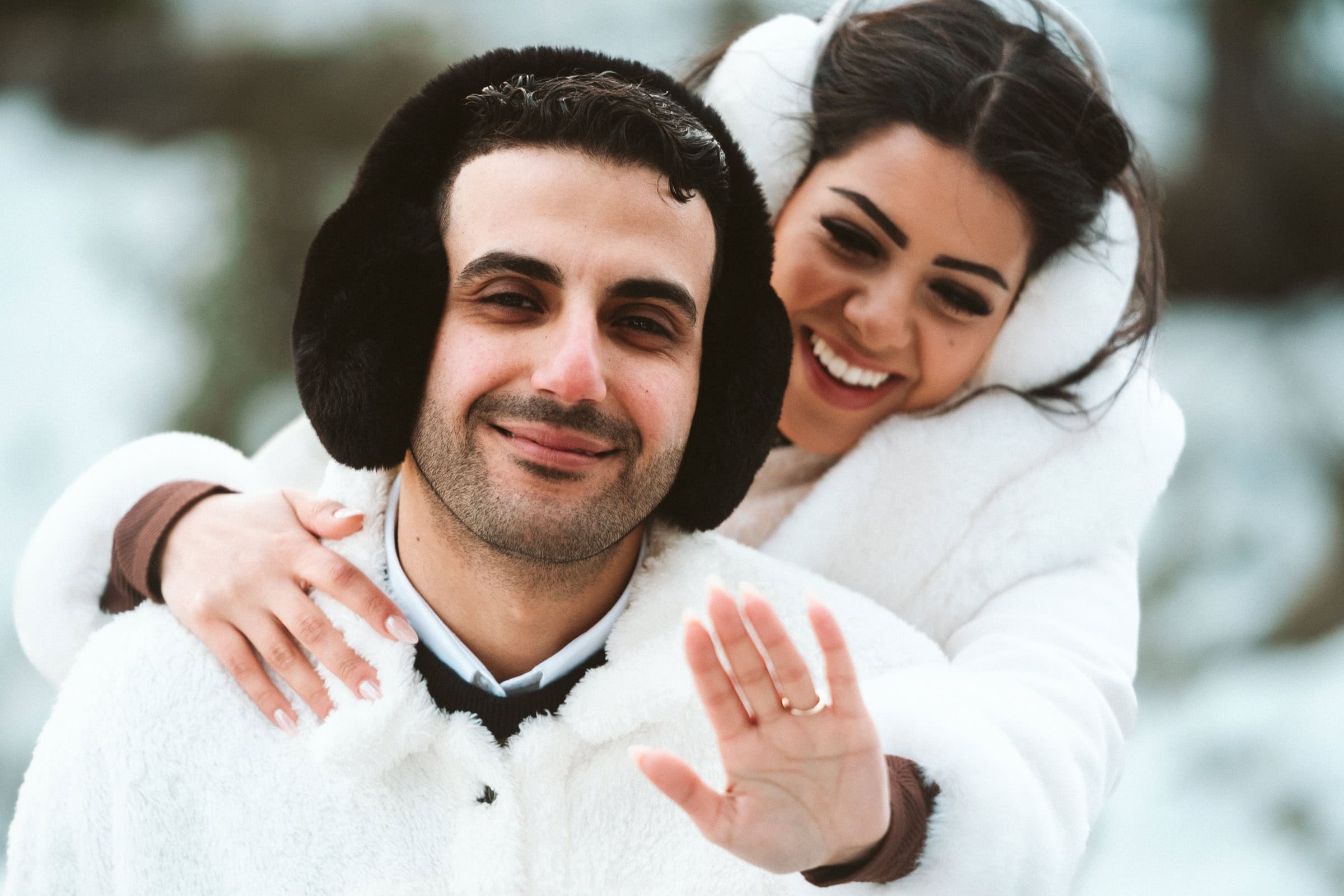
Always bring a hat. You can swap for earmuffs for the photoshoot.
What to wear in Lapland in winter if you are a small or lean person
If you’re small, lean, or both, you’re going to get colder faster than tall and big people. That’s simply physics – you have less body mass to create warmth, less fat insulating you, and proportionally more skin to let the heat escape. Fun!
At the same time, lean people (often women) tend to dress in fewer layers, because who wants to look like Olaf the snowman, right? So you put together a Lapland outfit that is first of all stylish, and only then warm, thinking you can hack it. But the cold will always win. You will be shivering, and all the money you poured into your photoshoot or trip of a lifetime will go down the drain. Because remember:
If you’re cold, your pictures will suck and that’s just how that is.
The good news? With small adjustments, you can stay be warm and stylish. Layers are the key.
What you should do
- Upgrade your base layer (most important) – choose midweight or heavyweight merino, not thin summer merino.
- Add one more base layer – merino biker shorts, merino underwear (boxers style), merino top.
- Add one more mid layer – two thinner mid layers work better than one thick one.
- A thin fleece + wool sweater
- Down vest or thinner, shorter down jacket to wear under your outer jacket
- Look for cropped or fitted mid-layers that don’t bunch
- Get a longer winter parka (mid-thigh), choose warmer than average
- Double gloves: thin wool gloves or glove liners inside wool, fleece lined mittens
- Double up on socks (thin merino + thick wool)
- Windproof is essential
- Not just jacket, but windproof pants (even on a sunny day)
- Jackets with adjustable cuffs and hem to stop cold air leaks
What you should avoid

What to wear in Lapland in winter for kids
In Finland, it is considered a child’s right to spend plenty of time outdoors. It is common and strongly encouraged for daycare children to play outside for about 1–3 hours a day, preschoolers often reach 2–4 hours, and school-age children have their recesses outdoors throughout the year. Outdoor time continues in nearly all weather conditions and is only shortened or moved indoors in extreme cold, typically around –10°C/14°F for toddlers and preschoolers, and around –15°C/5°F for older children, depending on wind and local guidelines.
This is possible because kids in Finland are dressed for the weather. Small bodies have less mass to generate heat, more surface area per kilo, and very little natural insulation. When you add wind, snow, or sitting still in the cold, their body temperature drops quickly. That’s why kids who seem “fine” one minute can suddenly be freezing the next.
If your kids are cold, no amount of bribing or playing will work. Your pictures will suck and that’s just how that is.
proper winter: snow and temperatures below 0°C/32°F
- A hooded snowsuit or a winter jacket and pants
- Mid-layers (wool overall, fleece, etc.)
- Two pairs of insulated winter mittens – one will always be wet, plus thinner wool mittens or gloves as liners
- Wool socks – double layer, thick over thin
- A warm beanie
- A neck warmer or balaclava
- Warm, high-cut winter boots
slushy winter: wet snow/rain and Temperatures Above 0°C/32°F
- Rain gear that fits over winter clothing, or a lined rain suit that is warm enough with a mid-layer
- Lined rubber boots
Why each layer matters
Clothes layering is what moves your comfort level from “I’m surviving this” to “this is actually magical.”
Base layers: The corner stone of warmth
Merino is your best friend in the North. It stays warm when moist, it doesn’t itch, and it doesn’t trap that “sweaty cold” feeling. Cotton and plastic based “thermos” are the opposite. Leave them home.
Mid-layers: your personal heating system
Fleece or wool is what keeps your body heat in. You want something that traps air but still breathes, because overheating leads to sweating, and sweating leads to freezing.
Outer layers: the wind is not your enemy, unless you let it be
A proper windproof/waterproof shell makes or breaks your time outdoors. Cold wind will slice through a not windproof jackets like hot knife through the butter. Water- and windproof trousers protect you when you sit, kneel for photos, lie in snow, or chase your toddler in snowbanks.
Accessories: tiny items, massive change in comfort
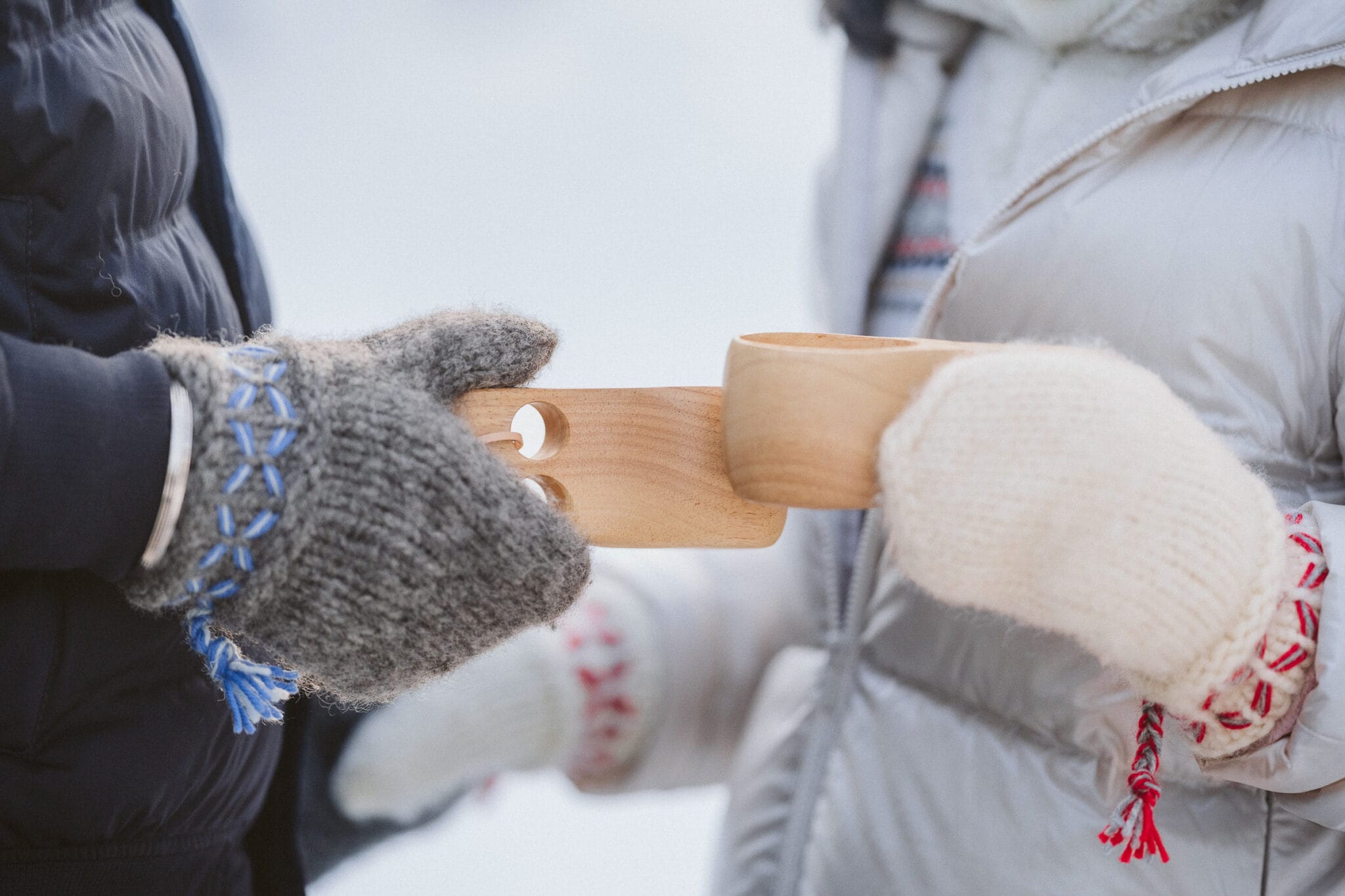
Your hands and feet get cold first. Gloves give you dexterity; mittens keep you warm. Wear both when possible. Scarves look pretty but don’t stay put and don’t fit under jackets. Hats matter more than people want to admit. Remember that 30% of heat is lost through your head.
For kids, a balaclava under hat is the best choice = no gaps, no snow inside their collar, no whining (or less of it, ha).
Footwear: warm feet = happy happy
Insulated winter boots with room for wool socks (1-2 sizes bigger than your actual foot size) are essential. Don’t size too small, again it’s the layer of warm air in your boots that keeps your feet warm. These are not sneakers. You need to be able to fit your wool socks (or even two pairs) comfortably in your winter boots. If you still worry you feet will be cold, you can get wool insoles or use feet warmers in your shoes. Your shoes are important – frozen toes will ruin the snowy magic quicker than anything else.
lapland photographer tips
cold is thirsty
Northern air is dry. Chapped lips happen fast. So does cracked skin on hands. Protect early. Apply often.
5 mistakes northerners never make when dressing for the cold
1. Wearing cotton as a base layer
Functional clothing only works when the base layer keeps you dry. Cotton soaks up moisture and traps it against your skin. Once cotton is wet — from sweat, snow, or breath condensation — it stays wet, and wet means cold.
2. Leaving gaps at the wrists, waist, or neck
Cold air sneaks in through every tiny opening. Finns close their cuffs tightly, pull mid-layers fully down, use neck warmers instead of scarves, and always tuck in shirts. Investing into a winter jacket and then not zipping it up because of “style” is stupid. It is. Sorry, if you don’t like my language, but it is. Buy a jacket that you like even zipped up.
3. Wearing the wrong socks or too many socks
Warm feet require one or two pairs of good wool socks and room for air to circulate. Expensive, but tight boots are useless. Proper fit beats extra layers every time.
4. Forgetting the windproof layer
The biggest enemy in the North isn’t the cold — it’s the wind. Northerners always check the actual temperature and the wind chill. A strong wind can make –5°C feel like –20°C.
5. Standing still for too long without adding insulation
Locals know that your body heat drops fast when you’re not moving. That’s why northerners add a mid-layer or down vest the moment they stop walking, skiing, or hiking – or when you are planning to stand long for a photoshoot.
Vendors that I have been using for years
Finding the right vendors/brands has been a major issue when, few years back, I was deciding what to wear in Lapland in winter for one week photography expedition in complete wilderness.
I wanted to invest in items I could use in winter in Helsinki as well, but they had to tick all the boxes for what to wear in Lapland in winter: functional, unrestrictive, lightweight, packable, lasting and, vanity being the favorite sin, still look good. I also care about not buying more that I need and using the same clothing item for a long time, to help our planet.
After much research, this is the ultimate winter content of my closet that has served me well over many winters, photoshoots and wilderness expeditions.
Base layers
mid layers
outer layers
Accessories and footwear

Where to buy north outdoor Brand
If you arrive to Helsinki before going to Lapland, shop the Finnish brand North Outdoor for all merino wool layers you heart may ever desire. Plus points: their sweaters are made locally in Oulu, Finland.
Visit the North Outdoor brand store in the city center (next to the Helsinki Cathedral near the Senat Square). They also have a factory store in Oulu, just in case you travel through the area, for example when going to visit the Kemi icebreaker and snow castle. You can ofc order online from northoutdoor.com, and get your goodies delivered worldwide (though to save some CO2 I would have it delivered to your first accomodation in Finland). Within Finland you get your order in the next business day.
Where to buy Fjällräven and Hestra brands
In Finland, you can buy the Swedish brands Fjällräven (jackets, trousers) and Hestra (gloves) from these outdoor equipment resellers:
Partioaitta: online or from stores in Helsinki, Espoo, Vantaa, at the Helsinki-Vantaa airport near gate 30, Oulu, and in Lapland in Rovaniemi and Saariselkä
Scandinavian Outdoor: online or from stores in Helsinki, Vantaa or near Turku
Dress according to weather
And that means to dress according to how the temperature + wind make it feel, not what the thermometer says. Windproof/waterproof clothing has the added bonus that snow doesn’t stick to it! You can do a million snow angels and then stand up, brush off the little snow that didn’t fall off on its own and look like new.
Wind chill – what it is and how to use the info
Wind chill tells you how cold it feels on your skin, not the actual air temperature. Wind blows away the thin layer of warm air your body creates, so you lose heat that much faster. That’s why –5°C/23°F on a calm day can feel totally fine, but in strong wind suddenly feels bitterly cold. During winter, the wind chill is marked in the Finnish weather forecast with an icon of a person.
Wind chill Cheat sheet:
- When the wind is stronger than 10 m/s, the “feels like” temperature drops very quickly and the time you can spend comfortably outdoors gets shorter.
- Kids, lean people, and people who don’t move much feel wind chill more intensely than big guys skiing.
What to Wear at 0°C/32°F to –5°C/23°F
Focus on waterproof layers + light insulation.
at –5°C/23°F to –15°C/5°F
Proper layering, warm accessories.
at –15°C/5°F and below
Maximum warmth + keep moving + keep eating snacks and drinking enough water/tea.
for Northern Lights Nights
The night temperatures are even lower, you are standing still hoping for the auroras to appear… oohlalala baby, it’s cold outside! Wear all you brought + hot packs + snacks/drinks + move as much as you can.
Best accessories and colors for winter photoshoot
For winter photoshoots in Lapland, the most beautiful and practical accessories are the ones that add warmth, texture, and softness without distracting from faces.
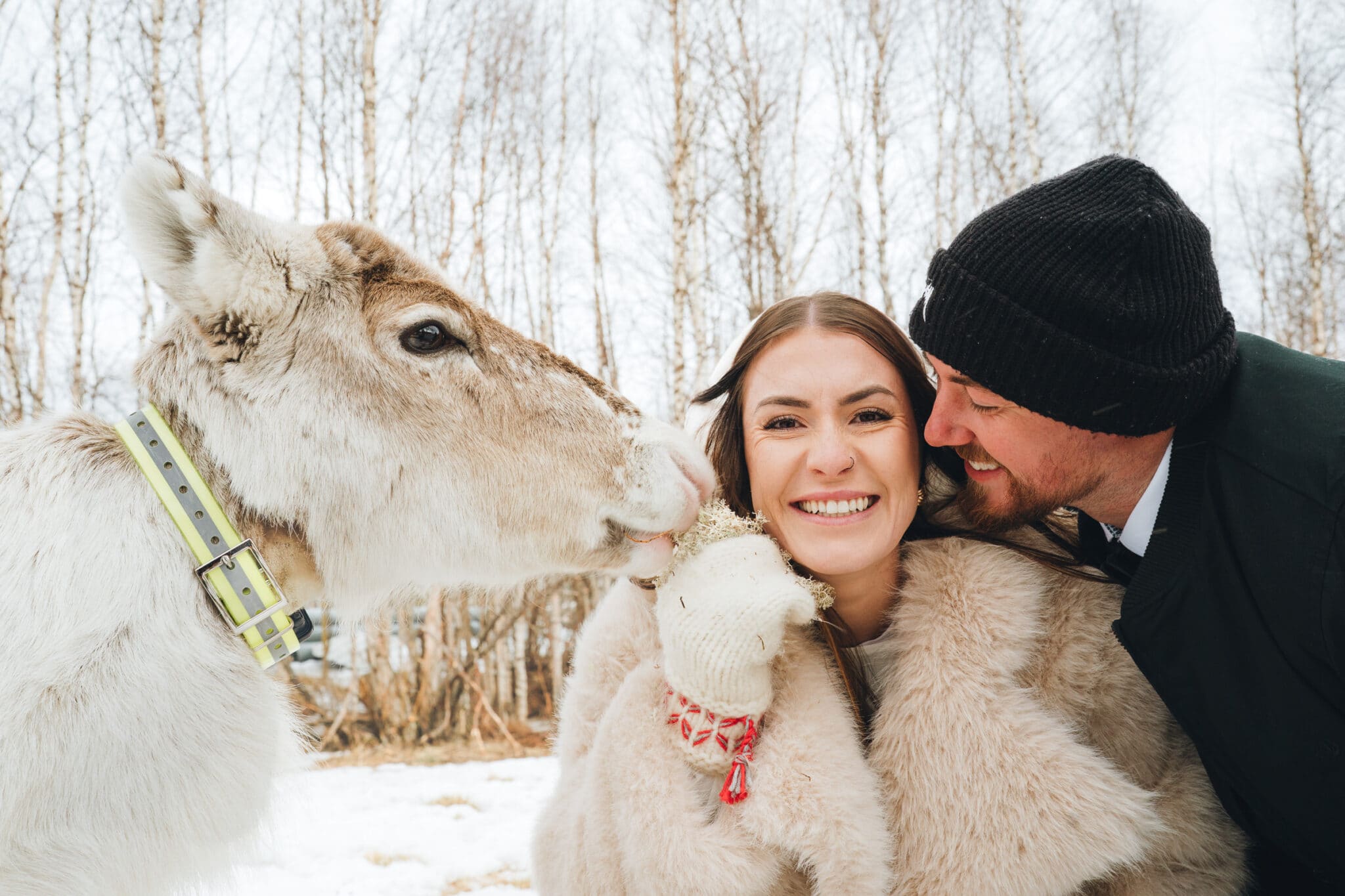
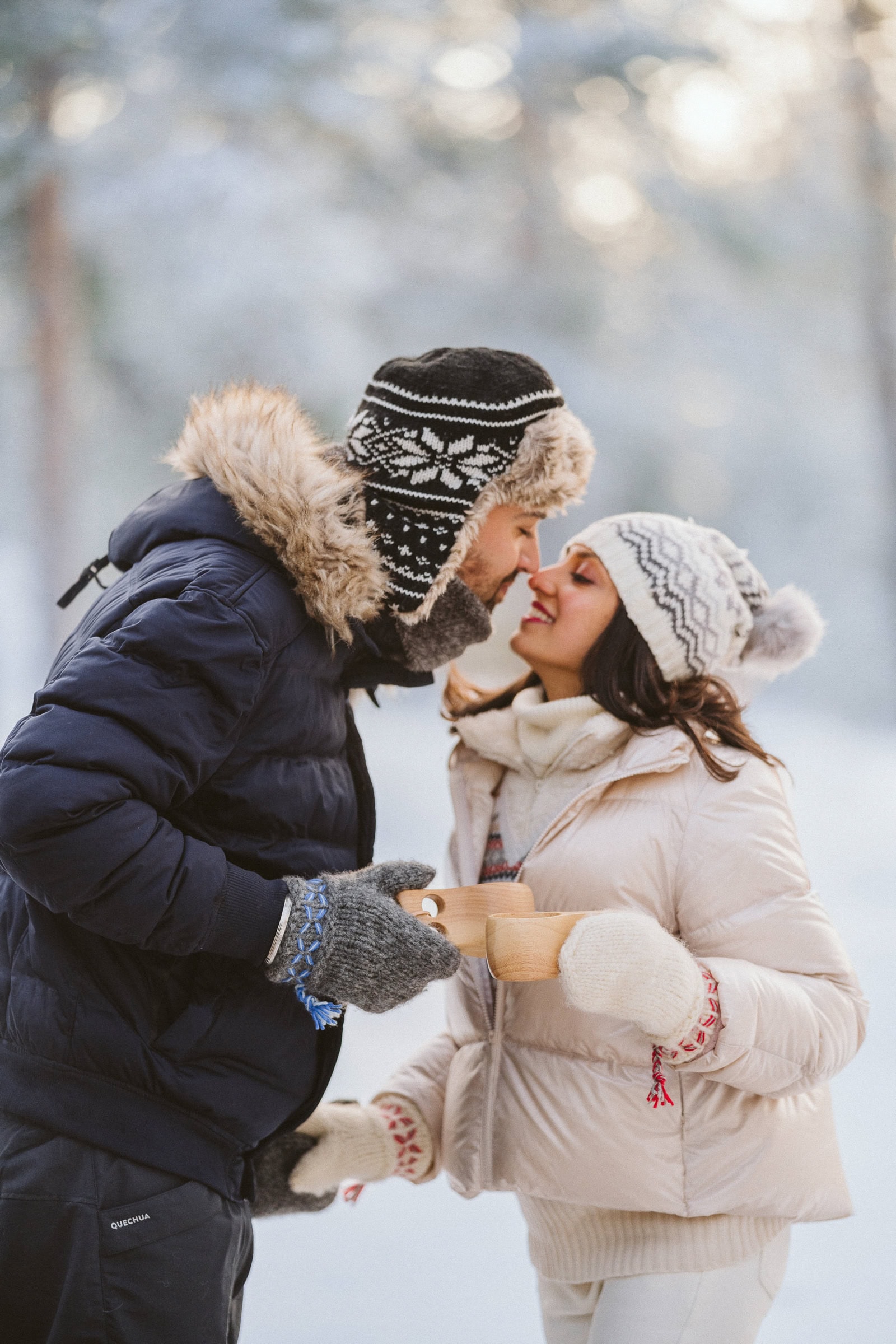
Wool mittens are a favourite — they look timeless, hide hand warmers easily, and photograph much better than gloves. A well-fitted knitted beanie with a little texture or a faux-fur pompom frames the face and keeps ears warm, while a simple wool neck warmer or a soft scarf adds that cozy winter look without overwhelming the neckline. Warm winter boots in neutral tones don’t steal attention, and fluffy earmuffs (if you can’t stand the idea of wearing a hat for your photoshoot) bring charm and save your ears from falling off your head.
The most important is to keep everyone happy, warm and relaxed in front of the camera — because both comfort and discomfort always show in the photos. Yep, even if you think you are faking it well, you chattering teeth, red running nose and tight shoulders will always show. Dress warmly.
lapland photographer tips
Quick styling formula that always works
One textured accessory + one soft neutral + one deeper tone.
Example:
Cream sweater + beige wool hat + forest green parka = perfect.
Lapland’s winter landscape is a soft blend of white snow, cool blue shadows, deep evergreens, and warm golden light, so the most photogenic colours are those that complement this natural palette.
Soft neutrals like cream, beige, ivory, warm grey, and shades of brown always look elegant and timeless against snow. Rich natural tones — forest green, moss, navy, rust, burgundy — add depth and contrast without overpowering the scene. Pastel shades such as blush, dusty rose, sage, and powder blue glow beautifully in snowfall or at blue hour.
Avoid neon tones, busy patterns, and large logos, as well as outfits that are all black, which tend to lose detail in shade. When everyone wears tones that blend softly with the landscape instead of competing with it, the entire image feels calmer, warmer, and more magical.
Final thoughts
Putting together winter gear from scratch can feel overwhelming, not to mention high-quality cold-weather clothing is expensive. Most families coming to Lapland from warm latitudes don’t need to buy everything new. A lot of excellent winter gear can be found second-hand, rented locally, or bought with the intention to resell afterwards. The pieces truly worth owning yourself (and using long after your trip) are the ones closest to your skin: a good set of thermal layers, warm wool socks, and a proper hat. Those are the items that make the biggest difference to your comfort and can be used every winter, anywhere.
Everything else, from the snowsuit for your kiddo to the boots, can be borrowed, rented, or purchased used without losing warmth or functionality. And remember: even the best clothing works only when your body stays warm from the inside. The real secret to staying comfortable in Arctic temperatures is to keep moving. A few steps, jumping in the snow, a snowball fight with the kids, this all helps your body generate the heat that no jacket can create on its own. Warm layers matter, but movement is the real magic. Let the Northern adventure keep you warm.
What to wear in Lapland in winter post has following sections:
- Lapland packing list
- Small/lean people specific items
- Kids specific items
- Why each layer matters
- 5 mistakes northerners never do when dressing for cold
- Vendors list for each layer
- Dress according to weather
- Wind chill
- What to wear at 0°C to –5°C, at –5°C to –15°C, and below –15°C
- What to wear for Northern Lights nights
- Best accessories and colors for a photoshoot


